
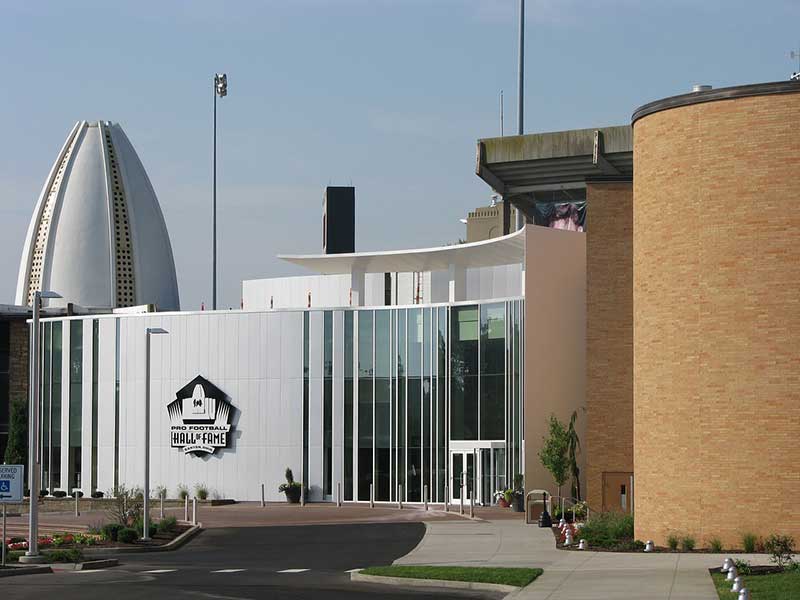
The Pro Football Hall of Fame doesn’t change much about how it does business. That’s kind of the point of the place. But on Friday, the Hall announced the biggest shake-up to its selection process in years, and it’s worth digging into what’s actually changing and why.
The Committee Is Getting Smaller
The most eye-catching change: the Selection Committee is shrinking from 50 members down to 28. Of those 28, 25 will actually vote, with three rotating alternates filling in as needed. Hall of Fame president Jim Porter said the move followed a two-and-a-half-year review process and got sign-off from the board of directors. It kicks in starting with the Class of 2027.
“The Hall continually reviews its bylaws to ensure the selection process reflects the highest standards of integrity and the magnitude of election to the Pro Football Hall of Fame,” Porter said in a statement. “There is no more important task at the Hall of Fame than the election of each new class.”
One notable side effect: the Hall is dropping the old requirement that guaranteed at least one selector from each of the NFL’s 32 home markets. That structure had been in place for a long time, and getting rid of it changes the makeup of who’s actually in the room making these calls.
No More Separate Seniors Pool
Perhaps an even bigger change, although one that may draw less attention away from Zoneblitz, is the elimination of the seniors category for players. Previously, once a modern-era candidate had been retired for 25 years, they got moved into a separate seniors pool, competing against other old-timers for a limited number of slots each year, alongside a coach and a contributor.
Going forward, every eligible player goes into one combined pool. The Hall says the goal here is to cut down on any unintended bias that might creep in when candidates get sorted by era before anyone even votes. The categories for coaches and contributors are staying put. I suspect many fans of old school football will not be fans of this change, but in recent years, it has started to feel at times that the number of truly viable senior candidates was dwindling, and the ongoing debate of the Hall of Fame worthiness of several favorite senior candidates kind of shows that. Even as a Viking fan who would love to see Jim Marshall finally make it to Canton, we realize he’s not a perfect candidate, and continuing to force too many senior candidates may eventually water down the honor.
Voting Goes Back In Person
Porter also confirmed the committee is returning to in-person voting and discussion, a format the Hall moved away from during the pandemic in favor of virtual meetings. Selectors will now gather in person during the first week of February to hash things out face to face rather than over a screen. The hope is that real conversation in the room leads to better-informed votes, and possibly fewer leaks before the results go public.
Why Now
None of this happened in a vacuum. It comes about seven months after the 2026 class was announced and Bill Belichick, with his six Super Bowl rings, didn’t make the cut in his first year of eligibility, a result that set off plenty of noise around the league. Porter has been careful to say the changes aren’t a direct response to any one snub, and that the review had been in the works for a while. Still, the timing speaks for itself.
The Hall had already made one adjustment earlier in the year, cutting the waiting period for coaches from five years down to one, which is what opened the door for that recent coaching candidate to even be eligible this fast. This latest round of changes builds on that, reshaping who votes and how the pools are structured heading into 2027.
Whether a smaller, in-person committee and a single combined player pool actually changes outcomes remains to be seen. But it’s clear the Hall felt like something needed to change, and only time will tell if these changes are for the positive.
Let us know your thoughts on the changes in the comments.
quick assessment:
positive-potential annual PFHOF classes larger at 6 or 7; (compared to recent rules in 2025, 2026 elections); negative-seniors chances become slim competing against modern candidates plus when there are solid coach candidates like Belichick.
voters more likely to vote modern players over seniors and contributors
so 2027 could look something like this: 13 players + coach (BillB) + contributor (Kraft) =15 finalists..reduction vote to 10 and then 7…..25 voters then each select 6, total of 150 votes, finalist needs 20 to be elected (80%) gives us Gronk (25)/BillB (24)/AP (22)/Suggs (22)/DWoodon(20)/Yanda (20)/WAnderson (17) at best end up with class of 5 moderns+BillB??
I wonder when the next 25+ year candidate gets in? Maybe never Under these Rules. I still believe there are some worthy candidates from that group of players.
I get what youre saying Tony, but there are a still large number of deserving, viable senior candidates that should have a chance at election. Some super-seniors are more deserving than 1970s-90s players but who can determine if they can make headway against modern candidates?
Will only about 10-20 seniors even make a combined preliminary list? It will get heated and interesting. I truly dont feel another senior will get elected until a next round of voting changes.
Bill: goos question. Here’s an outside the box answer: Darren Woodson. He is already in year 23. He clearly has support, but with the list of upcoming first ballot guys, he could continue to hang around for a couple more years. Nothing would “drop” him from the ballot after year 25.
Therefore, he seems the most logical answer to “who will be the next 25+ year candidate” to get inducted.
I hope I’m wrong on multiple levels. Hope Woodson gets in sooner. Hope Jacoby or another “senior” makes it this year.
Another interesting question: will there be any more Eric Allen or Sam Mills type “hurry up and get them in before the senior abyss” when there is no deadline…
Woodson was in year 19 of 20 as modern, but you are correct that really does not make a difference anymore as once eligible as a player (5 year waiting period) you stay in that shared pool permanently..the one advantage he has is made final 10 last two years as modern, so among that group and now within Moderns/seniors, he has a high awareness and profile among the voters plus he played in 1990s-its the pre 1990 former seniors who are going now to have hard time getting elected as voters will not know them as well.
Under these rules I would still prefer to be D Woodson and not KAnderson or Jacoby or SMorgan etc…
Does likely remove risk of “hurry up and get them in before senior abyss”….of course we are assuming some form of senior pool never returns one day…
yea and it could be that if the new 25 voters are a lot different mix then the past 50, the results for players from 200 to 50 to 25 to 13 finalists could be much different than 2026 results
Great last point Paul. I thought of that too. Players who appear to have momentum could lose it and vice versa. It is a little bit like multiple variable math. Two differences (i.e., the pool of selectors and the rules) can produce drastically different results even when the changes themselves are minor (let alone when the changes are major like these). In short, I don’t think we can predict anything other than Peterson and Gronk being locks.
will depend a lot on who those 25 are, as if many return from the 50, its possible there could be plenty of carry forward from 2026…but without the risk of falling into the seniors pool how will that impact chances for Webb or even DWoodson…
and for one final year the carry over off previous year election of those in final 7 not elected into next year finalists continues, meaning within the 2028 player 13 finalists will be Suggs,WAnderson and Yanda
top player candidates will remain top candidates, I suspect along with AP and Gronk, Suggs,WAnderson and Yanda plus we will see BenR and perhaps RSherman..and returning players including Woodson,Gore,Witten, Holt -that gets is to 11 and only 2 open slots…for Wayne?, Eli? KWilliams? Evans?? hard to see another 2026 semifinalist(25 step) jumping those–but its possible
Hello, everyone! Just saw this info this afternoon, lots of very significant changes coming for 2027 so will see if this might make some positive changes, I guessed something was coming. It’s big!
The reduction of the voters will be interesting to see how that changes, and what locations and teams they come from and how this will affect the voting. Also, the return to in person, more one on one time to discuss the finalists.
The elimination of the Senior pool, as many of you since my years and years on X, I have strongly wanted more not less. Now they are all lumped together so will see if any Seniors rise up from this, my big one left now? White Shoes!! NFL put him on the top 100 team, but he is NOT in the HOF? An utter snub! I would now say after him, Anderson, Jacoby and also Marshall. But will see how it goes.
Keeping the avenue for the C/C separate and one finalist each? At least they are kept out of competing with the players, and you get one each only, along with the 13 player finalists. They still have a way to get in, and I can still see these two joined together in the future.
So, if I am looking at the class of 2027? I agree, Gronk and AP auto locks, and good for the Vikings for getting AP in the ROH this year. After that, will see, I am hopefully for the classes more in the 6 to 7 range, they still need to clean up more WRs and Willie Anderson.
So, I would say we see BB (Coach), AP, Gronk, W. Anderson, Holt, Yonda and Suggs.
My first thoughts are the pre 1980s Seniors are cooked and it’ll be interesting to see how the higher profile 1980s guys like Jacoby and Anderson will fare. Darren Woodson at least won’t have that clock ticking over his candidacy though he may have to wait a few more years if he’s not going to get that late push by 2028.
Is it confirmed that the cut is from 15-10-7 with each voter getting to select 6 from 7. In theory then all 7 could reach the required 20 votes. The smallest possible class would be 3 if the top 3 each get 25 votes and the other 4 candidates split the 75 (19-19-19-18). That seems very unlikely.
One last thing. How are they going to decide which voters to cut down to 25?
My thoughts
I can’t tell you how angry I am I’m so angry with the Pro Football Hall of Fame I feel like a volcano about to erupt
The only thing I like is returning to in person meetings
I can’t believe they’re reducing the committee to 25 members getting rid of the senior category and reducing the modern era finalists to 13
I want to share with you a quote from the press release
Porter said previous selection process bylaws left open the possibility of “unintended biases” in three main areas: the disparate skills of the individuals making the initial presentations of nominees for election at the annual meeting; the assignment of a Selector to each of the NFL’s 32 member clubs; and issues related to players reaching their final years of eligibility in the Modern-Era Players category.
Upton Bell was right the Pro Football Hall of Fame should be sponsored by a funeral home given the number of posthumous inductions
I thought Jim Porter was the savior in reality he’s the devil you know why he made these changes because he was born without a heart
This is worst than the last changes they’ve made it even worst than before
It’s official I’m not going to Canton in 2028 for Tom Brady’s Hall of Fame induction I’m done with the Pro Football Hall of Fame
I’ve been planning this trip for three years ever since Tom Brady announced his retirement and now it’s not going to happen
I haven’t felt like this since Atlanta lost the MLB All Star Game in 2021 but we got it back once the Braves won the World Series in 2021
You don’t treat people like this especially those who’ve been waiting for so long
It’s like someone gave my heart a wedgie it’s like someone punched me in the stomach
I can’t believe these are the changes they made this is only going to make it worst they didn’t address the root cause which is the voting process
We should all protest in front of the Pro Football Hall of Fame
I think the public outcry is going to be so strong they’ll have no choice but to make changes again
Knowing I won’t be attending Tom Brady’s Hall of Fame induction I feel like Brock Lovett at the end of Titanic when he realizes he’s never going to find the Heart of the Ocean
Three years that’s all I’ve though of attending Tom Brady’s Hall of Fame induction but I never got it and I never will
Sorry for the complaining and long post I’m just expressing how I feel just know we are all upset not just me
Charles Schulz was right happiness isn’t funny
Let’s just get ready for another small class in 2027 and be prepared to be disappointed again
Like Paul has mentioned AndyP, there could be at least six possibly enshrined. We know at least five, though a senior will have a tough time. Its doubtful a contributor as well but at least the Hall is weeding out the homer beat writer-voters that dont know or care about NFL history.
I say the 25-28 at large voters, eliminate the preliminary round. Just put their heads together and come up with 50 players. 35 modern and 15 senior and then do the cutdowns for the final inductions. This year will be the last for the remaining top 7 to go to the finalist list. If a senior can slip in there the better. Keep the coaches and contributor lists short as well.
Brian yeah great so what doesn’t matter I’m done with the Pro Football Hall of Fame
Why guys why
For those interested here is a detailed assessment and discussion of impacts (video starts a few minutes in) https://www.youtube.com/live/JvqjoS_NhCs?is=7tLrTY5qUqISixj1
Chances any pre 2000 players (aka seniors) make final 13 while going up head to head against post 2000 players (aka moderns) is now slim to none
Hall wants more recent, well known, popular players ejected and that’s what they are likely to get
Screw Porter, screw the Hall board
Hall wants more recent, well known, popular players elected and that’s what they are likely to get
Haha … more voters “ejected”
Paul totally also did you see my full rant
These are the worst changes the Pro Football Hall of Fame has ever made to the voting process
This new process gives 25 voters a final ballot of 7 and they each need to select 6 = total 150 votes, finalists need 20/25 to be elected, it’s easy to miss that selecting 6 from just 7 with that math means classes of 6 just because very likely as even 6×20=just 120, and if there were 3 getting all 25 votes (very unlikely most elections) that still leaves 75 votes across 4 finalists meaning 3 likely elected. So I think until we see a few election results it’s safe to assume classes of 6 as normal
But yes seniors and also contributors (except Kraft) are screwed as very likely voters will continue to be more familiar with players from 2000s and recency bias will be major factor.
For “modern” players (post 2000) more will get elected faster, immediately helps returning finalists from 2026 which is a deep pool, likely see three elected 2027 and similar numbers from that group over next 3-4 elections
Yep saw all the rants and takes which everyone has one understandably as is the frustration and anger. Hall isn’t going to care or listen so it’s up to everyone unhappy to decide whether to remain interested in Hall stuff or not, and no judgement on anyone choosing either path
This makes me miss David Baker
I can’t believe these are the changes we got and now’s it worst than ever
Well, we won’t have to wait long to see the preliminary list. From there we will see the numbers balance between modern era candidates and those who would’ve been part of the seniors pool. Then the cutdowns to 50 and 25.
Bill Belichick and Kraft will be the coach and contributor finalists until such time they are elected. We can write them in as 2 of the 15. That just leaves 13 players as finalists.
Of the 13 players who were finalists last year and not inducted, 11 were modern era with Ken Anderson and LC Greenwood the two seniors to miss out. This year we have Gronk and A.Peterson as first ballot guys. That means at least two of those 13 will not be finalists.
The returning 13.
K.Anderson
W.Anderson
J.Evans
F.Gore
LC Greenwood
T.Holt
E.Manning
T.Suggs
R.Wayne
K.Williams
J.Witten
D.Woodson
M.Yanda
Potential first ballot guys:
Gronkowski
Peterson
Coach/Contributor
Belichick
Kraft
Boknows yeah great so what doesn’t matter who cares
Paul what’s the point of the Pro Football Hall of Fame now
I actually predict there will no seniors among the 13 player finalists, we assume carryover from 2026 queue of modern finalists but until we still who is on the 25+3 alternates as new selection committee if new names there that queue could be re-set. Won’t impact the top candidates like Gronk AP BenR but could it impact Suggs? WAnderson? The WRs
And yes there should be seniors in own category with direct path to election but regardless Andy there still will be a very deserving class of 2027 added to the Hall of Fame- so there is still a point to it
even started to play around with some predictions (including vote) counts to see how the math works-of course sequence/orders in which of some players elected could be quite different
Future elections scenarios 2027-31
Updated 9.6.26 per new election rules
25 voters, must select 6 out final 7 finalists=total votes 150, finalist needs 20 for election (80%)…prediction is based on 6 elected per year (votes estimated)
2027 Gronk (24)/AP(22)/Suggs (22)/WAnderson(22)/Yanda(20)/BBelichick (24)
2028 Brady(25)/Watt(25)/Woodson(22)/Holt(22)/RSherman(20)/MShanahan (23)
2029 JKelce (22)/BenR(22)/Witten(22)/JEvans(22)/KWilliams(20)/MHolmgren (22)
2030 ZMartin (22)/Eli (21)/PPeterson(22)/Gore(22)/RHarrison(22)/TCoughlin (23)
2031 BWagner(24)/Jjones(23)/Wayne(20)/JPeters(20)/SGilmore(20)/AReid (24)
Yeah, at least 2 but I expect more and the seniors are indeed very vulnerable. And a finalist may also drop out from a previous year to make way for a strong first year group of candidates. How many seniors will even make the final 25? Not very many.
I do think we will see Classes of 6 going forward. With 25 voters and 20 votes needed, a candidate from the Final 7 would have to be left off the final ballot and therefore finish 7th on at least 6 of the 25 ballots.
I think I will wait until seeing new list of voters before trying to predict final 13 players for 2027 ballot
Good comments, as usual BoKnows34 … the cases of Big Ben and Brown will definitely get people talking these next few months. Haha … Paul looks too far ahead for me to keep up, but we will see.
We can rant positively or negatively on here all we want, but its a waste of time to keep saying the same negative rants. I for one, am happy for the new class that will get elected. We have to look forward to the deserving players end-goal, rather than worrying about the behind-the-scenes voting and changes, drama.
I still eat good sausage. I dont care about how its made behind the scenes.
Brian. I’m cautiously optimistic. It sucks for the Seniors but I get a feeling after another 4-5 years they will perhaps make a few more tweaks such as combining the Coaches/Contributors category and look again at making the “Seniors” a separate category.
I do like how they expanded the definition of a Contributor but it still won’t be long before they run out of suitable candidates, hence the predicted coaches/Contributors merger as a guaranteed finalist.
From Paul’s list of 2027-2031 he has mentioned 25 “modern era” and 5 coaches. All of them would be worthy choices and would not be surprised if we hit about 21-22 of them. Maybe Ronde Barber could sneak in and also Fred Taylor once Frank Gore is elected.
I’ll dare to put in a provisional list for 2032 as that means predicting retirements for Aaron Rodgers, Aaron Donald and Travis Kelce. Throw in Barber and Taylor and that gives us 30 names to watch out for from 2027-32. From the “Seniors”, Ken Anderson. LC Greenwood and Joe Jacoby are probably the most likely to gain support. They all have a degree of name recognition even among more casual fans and those who never saw them play. (I did see Jacoby).
Check out what Morgan Wick wrote
https://www.morganwick.com/2026/09/the-pros-and-cons-of-the-pro-football-hall-of-fames-selection-process-overhaul/
I feel bad for all the voters who are going to be replaced they should have just removed Bill Polian because he said there’s no need to worry about seniors pre 60s and told voters not to vote for Jim Tyrer
This presentation won’t take place now
Jim Porter: Ron Borges will open the discussion for Tom Brady and I know he’s waited all his life Ron
Ron Borges: I’ll make it brief I’ll just say Tom Brady end of discussion
Jim Porter: Ok and if there’s anyone who wants to say anything on behalf of Tom Brady anyone thank you Ron wish they were all that short
I’m going to write a letter to Jim Porter complaining about the changes I’m going address it to Jim Porter aka Chief Dodo of the Pro Football Hall of Fame and I’m going to say in the letter I would appreciate it very much if you would sign this letter at the bottom and return it to me because in years to come the signature of the worst president in sports hall of fame history is going to be worth a fortune
I’m boycotting the Pro Football Hall of Fame who else is with me
Polian needs to be removed but there are several others based on public comments in their role as voter also need to no longer have that role…my fear is the the Hall will also remove (“silence”) other voters for no other reason than needing fewer and clean out any vocal dissenters.
I no longer have time or interest to engage Porter or others will Hall or boycott. Will continue with my interest (perhaps with less effort and focus), including engagement with some voters and those in this form and other social media communities, including some push to eventually see a senior category return-but not going to happen for a few years.
At this point as even former seniors were getting to time in which even they played since 1990s/early 2000s, I am wondering if my efforts, and perhaps of others, should forget about a senior category as part of annual elections, and see if we can get enough support from some voters and historians to press Hall for one last special class-for PFHOFs 70th anniversary on September 7, 2033. Perhaps cap at 15 total of all seniors (12 players plus 3 coaches/contributors) who played before 1990. Final means to address those eras, and let annual Hall focus on elections of candidates from 2000s.
Like I said … a good proposal, and we will see if it can gain any momentum by 2033.
I will continue my write-in ballots in hoping it can help a candidate get elected. If Witten or Woodson get elected, I will visit the HOF again.
We just have to hope that the Hall does a good job of selecting a mixture of historian friendly, older and younger voters … more historians would be beneficial but as we know, alot of voters will be pissed off their privileges and status will be taken away … How will many of them react?
Hall clearly doesn’t care about seniors and betting we end up with a new 25 voters that mostly don’t care either – media and PFHOFers unlikely to press Hall to change rules again to give seniors a direct path to election. So I simply don’t envision any return to senior process anytime soon not even with next 5 yrs
I am actually hoping Bucko Kilroy can jump ahead of Kraft for the contributor slot this year. With his playing credentials, it would be like electing a senior if he could get voted in.
Paul addressed alot of players from 2027 – 2031, yet we cant forget about players that are eligible now including …
Earl Thomas– who I would put in the HOF ahead of P Peterson, E Weddle or R Harrison
Marquise Pouncey– who could take votes away from J Kelce being a first ballot selection. Pouncey could easily go in himself before 2030
Geno Atkins– who is deserving, underrated and could keep N Suh or F Cox waiting as well, before Donald sweeps in first ballot. Will Kevin Williams go in before any of these four? Doesnt have pass rush numbers that flash out his case despite accolades.
A Whitworth– has a case at tackle, with PFF attention, before J Peters and T Smith become eligible to complicate the cutdowns. He is eligible this year but probably wont gain traction yet.
Like I mentioned on PFRA website, will Pro Football Focus attention and grading help out less memorable great players like Weddle, Whitworth, D McCourty, and Harris Jr?
Then before 2031, you have the DB cases of T Mathieu and S Gilmore. Have they done enough to be elected by 2034?
Paul can you agree with me these are the worst changes the Pro Football Hall of Fame has ever made to the voting process
I’m more angry with the Pro Football Hall of Fame than I ever have been
Yep it’s a real mess with no real path to fix it. I don’t blame anyone who’s done with Hall and protesting its latest decision. I just don’t have time and energy right now nor do I think we will see quick chances back to help seniors. So at least for now watch for new voters and how rules creat class of 2027 which hopefully can see 6 elected as getting more deserving in has also been a hope – even while seniors and contributors are going to have nearly impossible chances.
Paul let us know if you hear about Judge, Gosselin, Borges, Christl, Turney, others staying on as voters?
I printed off the current list of 50 voters, and will compare to new list of 25+3 whenever the Hall gets around to deciding and then when they update webpage-that last step (given recent experience) could be months away-as I not certain we will get press release from Hall of the 25+3…could just come out from the voters
a year ago the first preliminary list (seniors) was released this week, followed by moderns two weeks later-its now going to be one (massive) combined list..guessing made public some time this month, and they don’t need new 25+3 member selection committee in place as its a separate group (unknown members) who reduces that list down to 50 semi-finalists
revised timetable of press releases on class of 2027 voting steps could look like this:
players preliminary nominees mid Sept??
contributors 20 semifinalists 3rd week Oct
coaches 12 semifinalists 3rd week Oct
players 50 semifinalists late Oct??
contributors 9 semifinalists early Nov
coaches 9 semifinalists early Nov
players 25 semifinalists late Nov
finalists 1 coach/1contributor early Dec
finalists 13 players late Dec
all election meeting mid to late Jan
all announce results thurs before SB
Purge of voters has started – many old timers are being removed, out of respect I am not posting names here until hall releases the new list in the coming weeks – and let those no longer voters to post their opinions on social media
Damn … I understand Paul.
Cards upset Chargers.
Donald will have to play as Garrett will miss at least 4 games.
Packers, Browns, Colts and Panthers had embarrassing losses.
Saints got robbed of a defensive TD in a close loss against Lions.
Cowboys and Rams also underperformed (to season expectations) while Lions and Bills also played below expectations
But I for don’t place much significance on week1, as takes until around week 4 to really see where teams are (that includes overreaction to huge unexpected wins like the Bears had)
The Bills didnt underperform, especially against that defense. Their first win there since 2006.
Steelers slept-walked but TJ Watt keeps adding to his HOF case. Bucs blew their game with turnovers and Dallas underestimated the Giants.
Purge of voters is underway while Hall website no longer has 50 voters listed but is updated to 28 with blank spots to add their names, and states “selectors are active members of media, persons intricately involved in professional football and/or PFHOFers”…heard of another long time voter no longer serving and indications are the vocal and/or more public plus old time serving voters are ones getting removed…we should like see updated list released by Hall very soon
I feel bad for all the voters who are going to be replaced
John McClain and Paul Kuharsky are not longer voters, expecting more “high profile” well-known and experienced voters to announce their removal soon
If its a true purge of older, experienced voters Paul, I think they are doing it to eliminate future senior player committees. All about modern candidates and recentism.
the Hall clearly has no interest in senior players, that’s been clear in recent years and with changes since 2024..I don’t see any going back in the near future (and I do know of at least one long time old school voter-who has been very supportive of seniors-who is continuing as a voter but yes several others are not
I never asked for it to be like this now look what’s happened I wish I had never gotten interested in the Pro Football Hall of Fame
Wonder what Clark Judge would say on Talk of Fame if it was still up
Paul what’s the meaning of the Pro Football Hall of Fame now
Jason Cole also announced he is no longer a voter.
So far there have been public conformations (stating no longer are they voters) by Tony Grossi, Cole, McClain, Kuharsky (total is 4) and I am aware of 3 others-all of whom are long time voters (writers). Expect more to become public in the coming days/week and new list of 25+3 posted on Hall website.
AndyP as to the meaning of the PFHOF now-its clearly not about the 100+ years of pro football history but honoring the last two decades, there is still a Hall and 5 to 6 will be elected into the class of 2027-likely including Gronk, AP, BillB + 2 or 3 others..that’s what the Hall has become, good or bad, that is the future. One can certainly look at the process and results as flawed-especially lack of “seniors”, others especially the general public fans will be excited to see the players they watched last few decades get the honor-take that as you would like to.
update:
Hall of Fame Cuts 19 Selectors With 280 Years of Combined Experience by PAUL KUHARSKY
“NASHVILLE, Tenn. – The Pro Football Hall of Fame’s dramatic reduction of its Selection Committee is eliminating some of its longest-serving members.
Rick Gosselin, who served for 31 years, is out. So are Frank Cooney after 33 years, longtime Houston representative John McClain after 33 and Cleveland representative Tony Grossi after 31.
Ron Borges, who represented New England for 24 years, and Carolina’s Darin Gantt, a selector for 16, are also out.”
Rick Gosselin (31, Dallas)
Frank Cooney (33, at large)
John McClain (33, Houston)
Tony Grossi (31, Cleveland)
Ron Borges (24, New England)
Darin Gantt (16, Carolina)
Clark Judge, (15, at large)
Geoff Hobson, (13, Cincinnati)
Jason Cole (12, at large, announced on X)
Armando Salguero (12, Miami)
Mary Kay Cabot (11, at large)
Matt Maiocco (10, San Francisco)
Tony Dungy, (6, Hall of Famer, at large)
Bill Polian (6, at- large, hall, of Famer)
Lisa Salters (6, at large)
Joel Bussert (4, at large)
Paul Gutierrez, (2, Las Vegas)
Rich Cimini, (1 NY Jets)
Those 19 account for at least 280 combined years on the committee, an average of nearly 15 years per departing selector.
One stated purpose of returning to an in-person selection meeting with a smaller committee is to encourage more robust debate.
I spent 11 years in those meetings. Several people on the cut list were among the most willing to challenge an argument or push a discussion in another direction. Some selectors who may remain rarely spoke.
Thirty-one selectors remain standing after this reporting. The Hall has said the new committee will be formed from the old, though Hall of Famer spots may be filled by new Hall of Famers. That means at least three others are off the committee but have not yet been identified.
Who Is Staying on the Hall of Fame Committee
My understanding is that among the 28 who will remain are:
Charean Williams (at large)
Calvin Watkins (Pro Football Writer of America rep)
Jim Trotter (at large)
Jeff Legwold (Denver)
Ira Kaufman (Tampa Bay)
Howard Balzer (LA Rams)
Gary Myers (NY Giants)
Vahe Gregorian (Kansas City)
Mike Sando (Seattle)
https://www.paulkuharsky.com/news/hall-of-fame-cuts-19-selectors-with-280-years-of-combined-experience
How much does these changes a lot these are wrong
It hurts knowing I won’t be going to Canton in 2028 for Tom Brady’s Hall of Fame induction
Maybe people with autism just aren’t ment to be happy
up to 23 voters removed..still waiting on Hall to post new list
Balzer staying helps … just glad Polian is gone … not surprised Myers is staying. He will make sure Eli is elected.
Gregorian was the guy that rejected Belichick last year. He claimed he voted for the seniors.
yea Gregorian stays on while Judge and Cooney are not–makes no sense…smells of playing favorites or going with the type Hall can control and keep silent.
Frank Cooney has updated list of current status of 50 votes on his SubStack story today
Hall has posted new 28 voters = 25 returning voters+1 new PFWA rep + 2 PFHOFers (WShields, JAllen)
https://www.profootballhof.com/hall-of-famers/becoming-a-hall-of-famer
Here’s a letter I wrote but haven’t yet sent to Jim Porter complaining about the changes
https://x.com/andythepops/status/2100698912805867550?s=61
Note among 28 are 25 voters and 3 non voting alternates (which are not identified on that list)
previous post, meaning 28 are identified as members of the committee, does not indicate which 25 will vote during class of 2027 election process…
Paul did you see my letter
Hall has also set membership of their coaches and contributors committees, splitting the 28 evenly between the two committees, no indication of whether non-voting historians will be involved (as was case in recent past, as currently not on those lists) or how many members of these committees who vote each year, perhaps its all fourteen?
https://www.profootballhof.com/hall-of-famers/becoming-a-hall-of-famer
Here’s Frank Cooney’s latest article
https://halloffootball.substack.com/p/hof-changes-too-many-unanswered-questions
It’s official Jim Porter is the worst president in Pro Football Hall of Fame history I thought he was the savior but in reality he’s the devil you know why he made these changes because he was born without a heart
I suspect at the end of the day Porter is thinking more like a CFO and less as a history museum President…as the Hall apparently now increasingly looks at the annual enshrinement as a cash cow that needs to be maximized and getting a process and voters who will simply elect the most popular, well liked, well known and recent players (and one coach) get them the largest amount of interest and attendance at paid events that week in August. Never forget that the Hall apparently did not have enough cash raised (or saved) to complete last phase of its expansion-improvements to the display spaces in the Hall-and NFL stepped in with a $30m check. That would seem to suggest a major shift by Porter and the Hall staff and board is increase revenues, show the league that their $30m investment led to profit or more financial stability the Hall-these new election rules appears to do that far more fans are coming to cheer on players they like and know, then the very few who are or come to support a player from pre 1990s.
Paul where did you learn they didn’t have enough money to complete the last phase of the expansion
Paul totally you said it
Its just a theory but the evidence would seem to point in that direction, which although I understand the Hall is business that needs revenues, I don’t think that focus should take away their mission its to “Honor the Greatest of the Game, Preserve its History, Promote its Values and Celebrate Excellence Together.” that includes path to election for seniors aka players from before 2000
and most of the good contacts I had with voters are folks who are no longer voters and for those of us who enjoyed regular stories and social media insights on the Hall elections have lost those voters who were most frequently posting those updates-which may be in part, intention step by Hall to remove the more “public” “vocal” voters active on social media like Cooney, Judge, Gosselin (in past, has not posted in recent years)..
Kaufman, Myers, Sando post occasionally (and Kaufman has regular radio show appearances and would comment about the Hall and elections) but not at the level or frequency that the others once did..we are going hear far less about elections and prospectives on results than in past-again I suspect Hall favors less said about the process and results
NFL gave Hall $30m to finish final stage of renovations – leads me to believe it was because Hall didn’t have that cash or ability to raise it on their own
Also wanted to acknowledge two other former voters who also posted about elections – Jason Cole (annually published poll of GMs and others about their predictions of election) and Tony Grossi had recently posted post election insights – two other sources to the process lost
I never thought it couldn’t get it worst but it got worst
Deion Sanders and Jim Porter are now on my mortal enemy list
Paul do you agree with me Jim Porter is the devil and he was born without a heart
Antonio Brown took a slap-on-the-wrist plea deal despite armed attempted murder … He will get probation …
Black Athlete Privilege!
Its hard for the prosecution to take a case to trial when the victim refuses to cooperate, as without that testimony their cases in winning conviction is impossible
AndyP …I don’t think Porter is evil or the devil, he’s likely responding to pressure from Board to elect more popular players which means more revenues for the Hall, his job depends on continued support of the Board, and remember there are NFL owners on Hall Board-same NFL owners that recently awarded the Hall $30m in funds to complete renovations-always follow the money….
Paul well I think he is I respect your opinion though also what did you think of my letter
Upton Bell was right the Pro Football Hall of Fame should be sponsored by a funeral home given the number of posthumous inductions and the fact they got rid of the senior category
good letter AndyP
AndyP you need to separate the person (Porter) from the institutional decision (Board), no need to make it personal, as Hall President he works for the Board and follows their directions. Could he personally be more supportive of seniors? Did he propose election processes that allow for seniors direct path to election, yes its possible, but if pressure and decision by Board is to make more money=elect recent well known popular players and a coach-he follows their directive or loses his job.
Paul so your saying it’s the board that was behind all this and did you see what I said about Upton Bell
I don’t think it was Porter alone who suddenly just decided in 2024 to flip his view about large classes including seniors to smaller classes and fewer (now virtually no senior). The pressure came from outside influences pushing the Board who responded by getting Porter and Hall staff to make 2024 changes. And then the Belichick mess angered and embarrassed the Hall leading Porter to seek payback fully supported by the Board. As always follow the money, Board are rich NFL owners and local Canton business interests/they think money and profit over history and what Hall increasing revenues and events bringing more money to local businesses and not electing Belichick hurt those.
Paul money over history I can’t believe it
its just my theory but would seem to be reason why no path for seniors, make them compete against moderns, they would seem to have little or no chance..so we end up with recent well known popular (and deserving) players and a coach-plus eventually Kraft as contributor. If the focus was history, Hall would still have election path for seniors it had since 1972
Paul well if that’s the case Jim Porter needs to be forced out now he doesn’t care about history he only cares about money which makes him the worst president in the history of the Pro Football Hall of Fame
Andy P – you are missing the point here, the money focus comes from the Board, Porter is only takings steps to increase profits at the Hall, so if he doing what the Board wants why would they fire him??
Its like NFL fans expecting owners to fire Roger Goodell when he works for the owners and his efforts are increasing value of franchises and annual revenues/profits..as as long as that continues he stays regardless of other issues don’t like with current game (and there are many).
We don’t like it or agree with that focus by Hall Board-revenue and profits, but seems like thats the approach they are taking, plus with NFL owners investing $30m into Hall and several owners are on the Hall Board, is seems like that revenue focus from Board will continue.
And for many years, including first few years Porter was President, there was a “partnership” between Hall staff/Board and the voters, the views and opinions of the voters mattered and the Hall would engage them asking for input and feedback, its how we got increased seniors in the 2000s and the centennial class..
but in 2024 something about that relationship changed, Porter did not consult with voters with the rule changes and after the voters did not elect BillB that partnership was forever broken, followed by Hall taking more control of process and self selecting a new selection committee.
Long time voter Frank Cooney recently posted a story that for many years he would have frequent interactions and conversations with Hall staff, all professional and as partners in the process, but over the last year he was ignored to the point now as no longer a voter, but still a member of the NFL media, not only is Hall and Porter ignoring his emails and calls, they actually blocked his numbers as they don’t want to talk to him at all about the Hall.
What does that say about the current relationship between voters but also with active members of the NFL media when Hall lacks any transparency, no interest in PR with the media, just posting updates on their webpage infrequently and selectively, and even less on their social media (where no news on the new process and selection committee has yet to be posted)
Paul you’re right about the money but I was also talking about the relationship between Jim Porter and the voters and I saw that story by Frank Cooney and you’re right what does that say about the current relationship between voters but also with active members of the NFL media I’m smelling something fishy going on at the Pro Football Hall of Fame and with Jim Porter my gut feeling’s beginning to kick in that ok something’s not right here
It didn’t have to end up like this and it did
It certainly didn’t – its real unfortunate, sad and unnecessary, still should be room and process to respect and honor the past (pre 2000), and many deserving players likely will not get into Hall because of it
Paul totally why it did it have to end up like this and did you see my first post
AndyP it seems like we have been over this plenty of times-its crap and terrible, but starting in 2024 there was a shift of power away from voters to the Hall, and Hall staff/Board decided with that power they wanted small classes, more “deserving” players which has evolved in 2026 (after voters messed up the 2026 election-yes in part because of the stupid election rules) to get modern players and coaches in, we don’t care or need seniors-lets get more excited fans with recent well known players elected, so more come to spend money in Canton..
like it or not, and I get the frustration..but for me its time to move on, accept or not the changes..for me that means less focus and interest since much of mine was on seniors…will still follow as many modern players and coaches deserve election, so for me I will focus on that…and hope for a future when seniors and history again have a place in the hall elections
It will be interesting to see if Holmgren gets another chance at election after Belichick? New voters could erase the last rejection.
Could Tomlin get elected after Belichick? He could get elected while coaching a new team in 2028. I feel he should wait, but many voters are enamored with his stretch of non-losing seasons.
Paul sorry if I upset you and I hope for a future too when seniors and history again have a place in the hall elections
Brian I hope so
I think Tomlin waits until such time voters know for sure he’s definitely retired for good. There is no rush to put him in.
I think the other recent coach finalists would seem to have more direct faster path to election, especially those with 2 SBs….until Andy Reid joins queue and heads right to the top
The Pro Football Hall of Fame overreacted to Bill Belichick not being elected by making these changes
To Me and you all would probably agree that putting people who worked on the television side of football should not be considers as contributors since they have their own award from the hall of fame
I would tend to agree, Hall already has awards for many types of contributors, plenty have received those honors, from media to PR staff to equipment managers etc……
if you were in charge of the hall paul who would you limit the contributor category to i would limit it to one of these categories
Owner
General Manager
Scout
Would appreciate your feedback on this Paul see what your opinion is on what i stated i only will be posting on here when something good crosses my mind
Paul did you see my latest post
Robert I agree with you and those three categories and I would also include officials also I thought you quit talking about the Pro Football Hall of Fame because you said on X you were done
Ill be posting andy whenever a thought crosses my mind i needed to take a break for my health