
by Tony | Oct 9, 2026 | Hall of Fame, NFL History
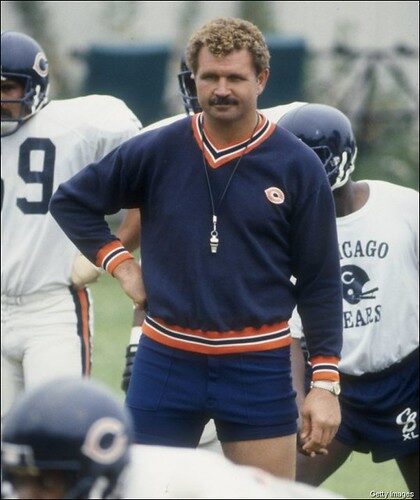
Mike Ditka, the first tight end ever enshrined in the Pro Football Hall of Fame and famous coach of Da Bears, died Friday at 86, his family announced.
Ditka was the beginning of a slow change to the tight end position. When the Chicago Bears took Ditka fifth overall in 1961, tight end was largely a blocking job. He changed that for the Bears immediately. As a rookie he caught 56 passes for 1,076 yards and 12 touchdowns, making him the first tight end to top 1,000 receiving yards in a season. He went to five Pro Bowls in six years in Chicago and won the 1963 NFL title. He finished his career with 427 catches, the most ever by a tight end until Kellen Winslow passed him in 1980. He also won Super Bowl VI with the Cowboys.
The Hall of Fame came calling in 1988, and Ditka became the first player at his position inducted. He had previously been a finalist in 1981, but didn’t make the finalist list again until his election in 1988.
In May 2013, the Bears announced they would retire Ditka’s #89, and chairman George McCaskey added that it would be the last number the team would retire. Having already retired more numbers than any other team, he said there was “no more appropriate one than 89,” to be the final one. The ceremony came at halftime of a Monday night game against the Cowboys on December 9, 2013, and Ditka became the 14th Bear so honored, joining Nagurski, Grange, Halas, Payton, Butkus and Sayers. Nearly 13 years later, his is still the most recent number the franchise has retired.
Ditka remains the only person in the modern era to win a championship with the same team as both a player (1963) and a head coach (1985), when he led the Bears to a 15-1 season and a 46-10 win over the New England Patriots in Super Bowl XX.
Where does he rank among the best #89s? We haven’t done 89 yet in our By the Numbers series, but that might be an afternoon project for us now. Sneak preview: Gino Marchetti & Ditka are probably at the top of our list, ahead of Steve Smith Sr., with Dave Robinson, Mark Bavaro, Frank Wycheck and Wes Chandler fighting for the next few spots.
by Tony | Sep 4, 2026 | Hall of Fame
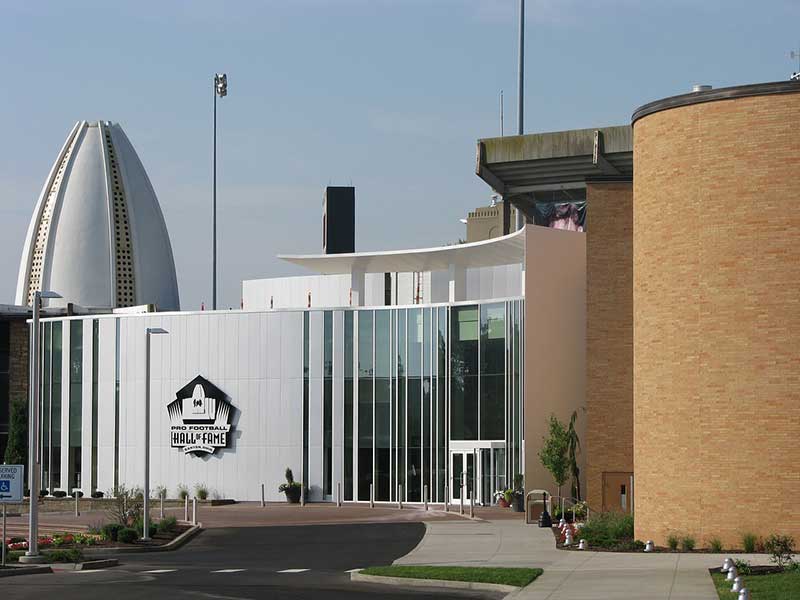
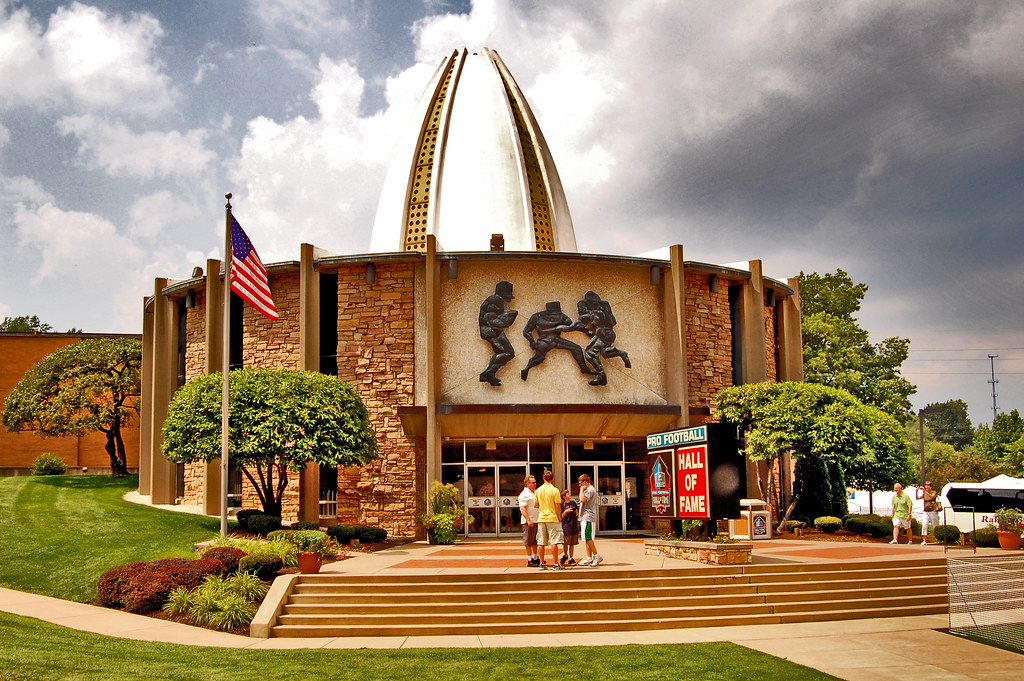
The Pro Football Hall of Fame doesn’t change much about how it does business. That’s kind of the point of the place. But on Friday, the Hall announced the biggest shake-up to its selection process in years, and it’s worth digging into what’s actually changing and why.
The Committee Is Getting Smaller
The most eye-catching change: the Selection Committee is shrinking from 50 members down to 28. Of those 28, 25 will actually vote, with three rotating alternates filling in as needed. Hall of Fame president Jim Porter said the move followed a two-and-a-half-year review process and got sign-off from the board of directors. It kicks in starting with the Class of 2027.
“The Hall continually reviews its bylaws to ensure the selection process reflects the highest standards of integrity and the magnitude of election to the Pro Football Hall of Fame,” Porter said in a statement. “There is no more important task at the Hall of Fame than the election of each new class.”
One notable side effect: the Hall is dropping the old requirement that guaranteed at least one selector from each of the NFL’s 32 home markets. That structure had been in place for a long time, and getting rid of it changes the makeup of who’s actually in the room making these calls.
No More Separate Seniors Pool
Perhaps an even bigger change, although one that may draw less attention away from Zoneblitz, is the elimination of the seniors category for players. Previously, once a modern-era candidate had been retired for 25 years, they got moved into a separate seniors pool, competing against other old-timers for a limited number of slots each year, alongside a coach and a contributor.
Going forward, every eligible player goes into one combined pool. The Hall says the goal here is to cut down on any unintended bias that might creep in when candidates get sorted by era before anyone even votes. The categories for coaches and contributors are staying put. I suspect many fans of old school football will not be fans of this change, but in recent years, it has started to feel at times that the number of truly viable senior candidates was dwindling, and the ongoing debate of the Hall of Fame worthiness of several favorite senior candidates kind of shows that. Even as a Viking fan who would love to see Jim Marshall finally make it to Canton, we realize he’s not a perfect candidate, and continuing to force too many senior candidates may eventually water down the honor.
Voting Goes Back In Person
Porter also confirmed the committee is returning to in-person voting and discussion, a format the Hall moved away from during the pandemic in favor of virtual meetings. Selectors will now gather in person during the first week of February to hash things out face to face rather than over a screen. The hope is that real conversation in the room leads to better-informed votes, and possibly fewer leaks before the results go public.
Why Now
None of this happened in a vacuum. It comes about seven months after the 2026 class was announced and Bill Belichick, with his six Super Bowl rings, didn’t make the cut in his first year of eligibility, a result that set off plenty of noise around the league. Porter has been careful to say the changes aren’t a direct response to any one snub, and that the review had been in the works for a while. Still, the timing speaks for itself.
The Hall had already made one adjustment earlier in the year, cutting the waiting period for coaches from five years down to one, which is what opened the door for that recent coaching candidate to even be eligible this fast. This latest round of changes builds on that, reshaping who votes and how the pools are structured heading into 2027.
Whether a smaller, in-person committee and a single combined player pool actually changes outcomes remains to be seen. But it’s clear the Hall felt like something needed to change, and only time will tell if these changes are for the positive.
Let us know your thoughts on the changes in the comments.
by Tony | Feb 6, 2026 | Hall of Fame, NFL History
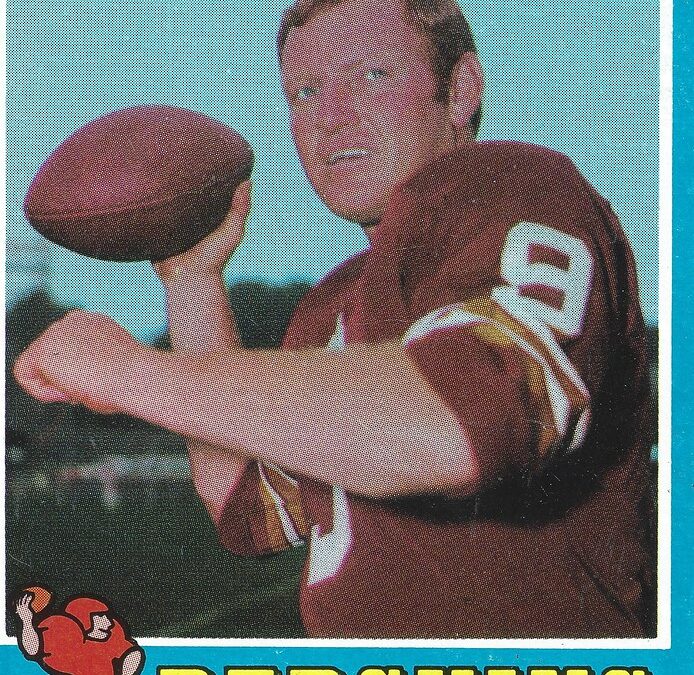
Hall of Fame quarterback Sonny Jurgensen died at age 91 his family confirmed on February 6, 2026.
Jurgensen played 18 seasons in the NFL, spending his first seven years with the Philadelphia Eagles (1957-1963). He truly became a legend and earned a reputation as being one of the game’s all-time most gifted passers after being traded to Washington in 1964. He finished his career there 10 years later.
“Sonny Jurgensen is, and always will be, one of the defining legends of Washington football,” Commanders Managing Partner Josh Harris said in a statement. “He was a brilliant leader, Hall of Fame quarterback, and had one of the best arms the game has ever seen.”
A Hall of Fame Career
Jurgensen’s election to the Pro Football Hall of Fame in 1983 recognized a career built on precision, production and pure throwing ability. His credentials were impressive for his era, which was far less friendly to the passing game than today’s NFL: 255 career touchdown passes, 32,224 passing yards and a passer rating of 82.6.
What set Jurgensen apart was his consistency. He led the NFL in passing yards five times, including a remarkable 3,747 yards in 1967 and 3,102 in 1969. In an era dominated by running backs and brutal defenses, those totals represented rarely matched offensive firepower. He earned five Pro Bowl selections and one AP All-Pro honor during his career, according to Pro Football Reference.
Jurgensen won an NFL Championship with the Eagles in 1960, though he spent much of that season backing up Norm Van Brocklin. After the trade to Washington, he became the face of the franchise, thrilling fans with his ability to throw the ball downfield with touch and accuracy. His production earned a selection to the All-1960s Team.
His 4/1 output wasn’t stellar, but his Hall of Fame case rested on more than just numbers. Jurgensen represented a shift in how the quarterback position was played. He was a pure passer who could dissect defenses and put points on the board through the air. Later in his career he split time with Billy Kilmer. He helped Washington reach Super Bowl VII following the 1972 season, but missed the game with an achilles injury.
Beyond the Field
After retiring as a player in 1974, Jurgensen remained a fixture in Washington. He moved into the broadcast booth, where his voice became synonymous with the team for generations of fans. His analysis and commentary on radio and television kept him connected to the franchise for decades, shaping how fans experienced games long after his playing days ended.
“After his career on the field, Sonny’s voice became a fixture of Washington Sundays for decades, shaping the way generations of fans experienced the game,” Harris added. “He was the embodiment of the Burgundy and Gold: tough, smart, and endlessly devoted to this franchise and its fans.”
The family expressed pride and gratitude for Jurgensen’s long life. “We are enormously proud of his amazing life and accomplishments on the field, marked not only by a golden arm, but also a fearless spirit and intellect that earned him a place among the legends in Canton,” the statement read. “But to those of us who knew him beyond the stadium lights, he was the steady, humorous and deeply loving heart of our family.”
by Tony | Oct 21, 2025 | Hall of Fame
The Pro Football Hall of Fame announced their list of 12 Coach Candidates for the Class of 2026 today:
Bill Arnsparger: The kind of coach whose fingerprints are all over NFL history, even if most fans couldn’t pick him out of a lineup. A quiet mastermind, Arnsparger built defenses that wrecked game plans and won championships. He was the brains behind the Miami Dolphins’ “No-Name Defense” that dominated the early ’70s and delivered the NFL’s only perfect season. Years later, he came back to Miami and did it again, crafting the fearsome “Killer B’s” that tortured quarterbacks throughout the ’80s.
Head coaching stops with the Giants and LSU were part of the journey, but Arnsparger’s true legacy was as the ultimate defensive architect — a schemer whose calm sideline presence hid a ruthless football mind. Every time a defense punches above its talent, every time a unit wins with brains over star power, you’re seeing echoes of Bill Arnsparger. He wasn’t a household name — but to those who know the game, he’s one of the all-time greats.
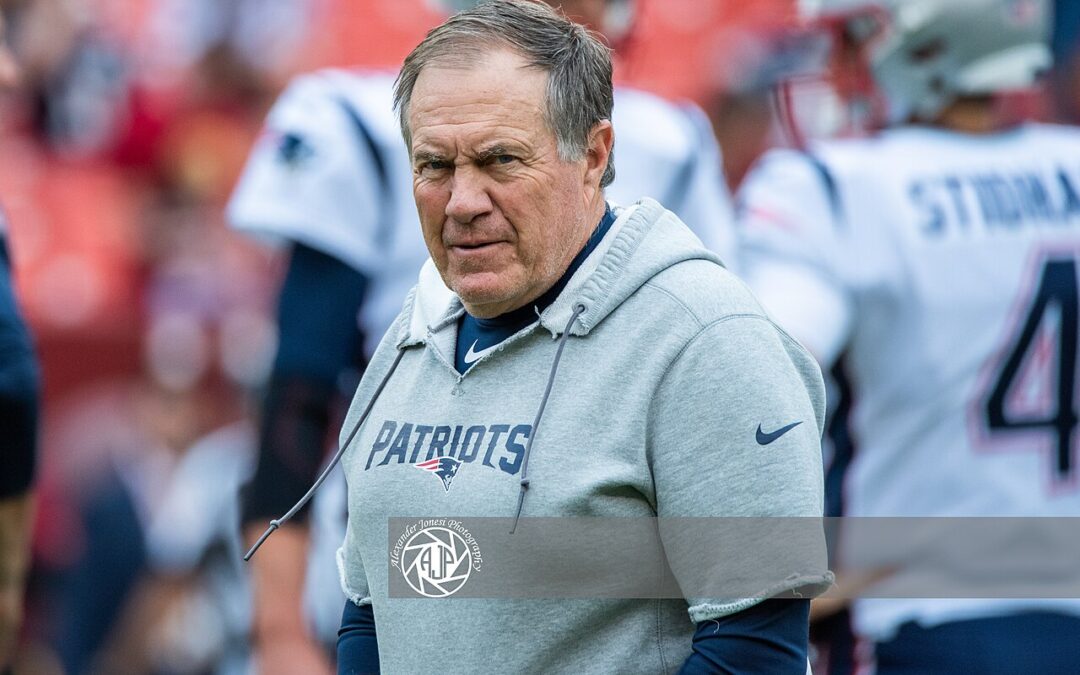
Bill Belichick: Not just a coach, but frankly a football institution, even if Tom Brady went on to win another Super Bowl without him. The hooded mastermind behind the New England Patriots dynasty turned a once-middling franchise into a two-decade juggernaut, collecting six Super Bowl rings as a head coach and redefining what sustained excellence looks like in the NFL. Belichick built his empire on ruthless attention to detail, relentless adaptability, and an uncanny ability to turn overlooked players into essential pieces of championship teams.
His resume speaks for itself: 300-plus wins, nine Super Bowl appearances, and a defensive legacy that stretches back to his days scheming for Bill Parcells and the Giants. Love him or loathe him, Belichick has become the standard every other coach will be measured against, a football savant whose genius often lies in the simplest things, like taking away what you do best and making you beat him left-handed. He may never crack a smile at the podium, but between the lines, Belichick is the closest thing the NFL has ever had to a chess grandmaster.
Tom Coughlin: Never the flashiest coach on the sideline, and he didn’t care one bit. A throwback to an era when discipline ruled and details mattered, Coughlin built winners the old-fashioned way: with accountability, preparation, and a healthy dose of toughness. He first made noise turning the expansion Jacksonville Jaguars into an AFC contender practically overnight in the late 1990s, but his true legacy was forged in New York, where he led the Giants to two stunning Super Bowl upsets over Tom Brady and the Patriots.
Coughlin’s teams were a reflection of their coach: gritty, resilient, and unshakable in the biggest moments. His Giants weren’t supposed to beat the undefeated 2007 Patriots, but they did. They weren’t supposed to climb out of a midseason hole in 2011, but they did that too. Along the way, Coughlin evolved from a strict taskmaster to a respected leader whose players would run through walls for him. He may not have Belichick’s mystique or Shula’s win total, but when the lights were brightest, Tom Coughlin’s teams were ready, and they finished.
Alex Gibbs: One of the most influential offensive line coaches the NFL has ever seen, even if his name never dominated headlines. A fiery teacher and relentless perfectionist, Gibbs revolutionized the way teams run the football by popularizing the zone-blocking scheme that became the backbone of dominant rushing attacks in Denver, Atlanta, and beyond. His system turned late-round picks and undrafted backs into 1,000-yard rushers, most famously transforming Terrell Davis from a sixth-rounder into a Super Bowl MVP and Hall of Famer.
Gibbs was as demanding as he was brilliant, known for his blunt coaching style and obsession with precision. His fingerprints are still all over modern NFL offenses, where zone concepts are now foundational elements of the run game. He never became a household name like some head coaches, but among linemen, coordinators, and offensive minds, Alex Gibbs is spoken of with near-reverence.
Mike Holmgren: One of the defining offensive minds of the modern NFL, a master play-caller and quarterback whisperer who helped shape an entire generation of football. Rising from Bill Walsh’s coaching tree, Holmgren carried the West Coast offense into a new era, first as offensive coordinator in San Francisco, where he helped guide Joe Montana and Steve Young, and then as head coach in Green Bay, where he and Brett Favre brought the Packers back to glory with a Super Bowl title in the 1996 season.
Holmgren’s teams were disciplined, balanced, and always dangerous through the air. After Green Bay, he turned around the Seattle Seahawks, building them into a perennial contender and taking them to their first Super Bowl appearance in franchise history. Known for his calm authority and sharp offensive mind, Holmgren left a mark that goes beyond wins and losses. His coaching tree produced stars like Andy Reid, Jon Gruden, and Steve Mariucci, and his fingerprints are still visible in the way the passing game is played today. Few coaches were better at molding quarterbacks and orchestrating elite offenses, and Mike Holmgren did both at a championship level.
Chuck Knox: The epitome of an old-school football coach, a tough, no-nonsense leader whose teams reflected his gritty personality. Nicknamed “Ground Chuck” for his run-heavy, physical offensive style, Knox built winners everywhere he went, turning around struggling franchises and instilling a culture of discipline and toughness. He first made his mark with the Los Angeles Rams in the 1970s, leading them to five straight division titles. Later, he revived the Buffalo Bills and then transformed the Seattle Seahawks into playoff contenders, guiding them to the AFC Championship Game in just his second season.
Knox wasn’t known for flashy schemes or headline-grabbing quotes. He believed in pounding the football, controlling the line of scrimmage, and playing smart, hard-nosed defense. His approach worked, delivering 186 career wins and three NFL Coach of the Year awards. More importantly, he earned the respect and loyalty of his players, who trusted his steady hand and no-excuses mentality. Chuck Knox never won a Super Bowl, but his impact on the game was undeniable. He was a builder, a stabilizer, and one of the most respected leaders of his era.
Buddy Parker: One of the most innovative and overlooked coaches of the NFL’s early era, a sharp offensive mind who helped shape the modern passing game. Known for his creativity and willingness to challenge convention, Parker led the Detroit Lions to back-to-back NFL championships in 1952 and 1953 and nearly a third in 1954. He wasn’t afraid to shake things up, as he made bold roster moves, trusted quarterbacks to throw more than most coaches of his time, and embraced the kind of offensive balance that was rare in the 1950s.
Parker also left his mark with the Pittsburgh Steelers, where he coached for eight seasons and laid the groundwork for the team’s future success. He was fiery, unpredictable, and fiercely competitive, even resigning abruptly before the 1957 season because he felt the team wasn’t good enough. Parker never received the Hall of Fame recognition many believe he deserves, but his forward-thinking approach and championship pedigree make him one of the most influential coaches of the league’s formative years.
Dan Reeves: the definition of a football lifer as a player, assistant coach, and head coach whose fingerprints are all over decades of NFL history. A former running back for the Dallas Cowboys, Reeves won a Super Bowl as a player and two more as an assistant under Tom Landry before becoming one of the league’s most successful head coaches. He led the Denver Broncos to three Super Bowls in the 1980s, helped revive the New York Giants in the 1990s, and guided the Atlanta Falcons to their first-ever Super Bowl appearance in 1998.
Reeves was known for his toughness, consistency, and ability to build winning teams wherever he went. His offenses were balanced and disciplined, and his teams were always prepared to compete at the highest level. While a Super Bowl championship as a head coach eluded him, his 190 career wins rank among the most in NFL history, and his impact on the game is undeniable. Dan Reeves didn’t just coach football, he lived it–and left behind a legacy built on perseverance, leadership, and a lifetime dedicated to the sport.
Marty Schottenmeimer: One of the most respected coaches of his generation, a leader who built winners everywhere he went and did it his way. Known for his hard-nosed, run-first approach dubbed “Martyball,” he emphasized discipline, defense, and controlling the clock. His teams were always tough, physical, and well-prepared, and they almost always won. Schottenheimer posted 200 regular-season victories, a mark that puts him among the NFL’s all-time leaders, and he led the Browns, Chiefs, and Chargers to consistent playoff appearances over three decades.
What Schottenheimer’s resume lacked was the one thing critics never let him forget: a Super Bowl ring. His teams often stumbled in January, but that shouldn’t overshadow his legacy. Few coaches have ever been as successful over such a long period, and few were as beloved by their players. Marty Schottenheimer built teams that played with heart, toughness, and purpose, and his impact on the game still echoes through the coaches and players he influenced.
George Seifert: One of the most successful and possibly underrated head coaches in NFL history, a man who kept one of football’s great dynasties rolling. After years as a defensive assistant under Bill Walsh, Seifert took over the San Francisco 49ers in 1989 and didn’t miss a beat, winning the Super Bowl in his first season as head coach. He added another championship in 1994 and finished his 49ers tenure with an astounding .766 winning percentage, one of the best marks ever.
Seifert wasn’t a flashy personality and rarely sought the spotlight, which is part of why his legacy is often overlooked. But his teams were disciplined, explosive, and relentlessly consistent. He guided San Francisco to five division titles and never had a losing season with the franchise. A later stint with the Carolina Panthers was less successful, but it doesn’t change the fact that George Seifert won more games in his first eight seasons than any coach in NFL history. Quiet and steady, he was the perfect steward of a dynasty and a big part of why the 49ers remained dominant well into the 1990s.
Mike Shanahan: One of the most innovative offensive minds of his era and the architect of one of the NFL’s most explosive dynasties. Best known for his time with the Denver Broncos, Shanahan turned John Elway’s late career into a golden era, winning back-to-back Super Bowls in the 1997 and 1998 seasons. His offenses were precise, balanced, and deadly, built around a devastating zone-blocking run game and a play-action passing attack that kept defenses guessing. Under his watch, players like Terrell Davis flourished, and Denver became one of the league’s most feared teams.
Shanahan’s coaching career extended beyond Denver with stops in Los Angeles, San Francisco, and Washington, and his influence continues to shape the modern game. His offensive philosophy has become the foundation for many of today’s most successful systems, carried forward by a coaching tree that includes his son Kyle Shanahan, Sean McVay, and Matt LaFleur. Mike Shanahan’s teams were smart, physical, and explosive, and his legacy as a two-time champion and offensive innovator is secure among the NFL’s coaching greats.
Clark Shaughnessy: One of the true pioneers of modern football, a visionary strategist whose ideas helped transform the game from its grind-it-out roots into the dynamic, tactical sport it is today. Best known for popularizing the T-formation with man-in-motion, Shaughnessy’s innovations revolutionized offensive football and laid the foundation for much of what teams still run today. His influence was felt most famously with the Chicago Bears in the early 1940s, when his schemes helped turn George Halas’s team into a powerhouse that crushed opponents and redefined offensive possibilities.
Shaughnessy also made his mark at the college level, most notably at Stanford, where he orchestrated one of the great turnarounds in college football history by taking a 1-7 team to an undefeated Rose Bowl season in 1940. Brilliant, demanding, and endlessly creative, he was often years ahead of his time, introducing concepts like shifting formations and disguised intentions that are now standard parts of the game. Clark Shaughnessy might not be a household name today, but football as we know it wouldn’t exist without his innovations.
In all, twelve candidates for one spot, with several on the list that are probably deserving, although Belichick has to be considered the front runner, unless the voters hold off to vote him in with Brady (and/or if they’re not convinced he’s done in the NFL yet). Leave us your thoughts below.

Actually met him at a sports collectibles show in the Detroit area in early 2000s-had chance to chat and he…
RIP Iron Mike Cowboys were never the same team after he and Dan Reeves left as assistant coaches Only Bears…
ZoneBlitz should do a "by the numbers" for Ditka's number 89. That would be a tough one, :)
6-time PBer C Doug Smith, 5- time PBer C Len Hauss, and 5-time PBer LB Keith Brooking were very good…
Sorry it's been too long. lol